Crypto Scams Are Getting Smarter. Here’s How to Stay Protected Crypto Scam Protection
By Saffron Guru • Sep 22, 2026 • Crypto Scam & Cybersecurity
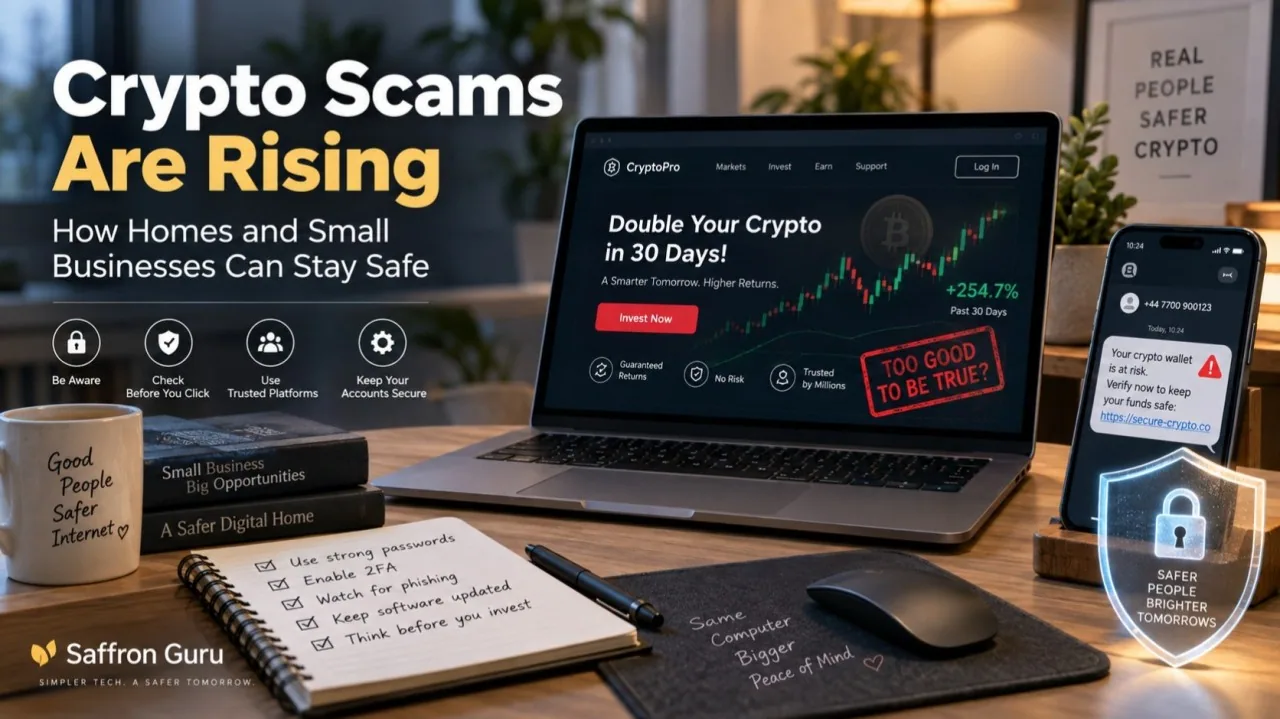
Crypto scams are becoming more polished, more believable, and more aggressive. Understanding the common patterns can help you spot the danger before you click, send, invest, or approve anything.
Crypto scams are no longer limited to random messages from obvious fraudsters. They have become more polished, more believable, and far more aggressive. What used to look suspicious at first glance now often arrives dressed up as a customer support message, a business opportunity, a recovery service, or an urgent security alert.
That is exactly why so many ordinary people and small business owners get caught.
Some people lose a few hundred dollars. Others lose life savings. And in many cases, the victim does not realize it was a scam until the money is already gone.
The good news is that most crypto scams follow familiar patterns. Once you understand those patterns, it becomes much easier to spot the danger before you click, send, invest, or approve anything.
Why crypto scams work so well
Crypto has three qualities that attract scammers.
First, transactions can move very quickly. Second, many people still do not fully understand wallets, exchanges, seed phrases, or blockchain transactions. Third, once funds are sent, recovery is often difficult or impossible.
That combination creates the perfect environment for pressure tactics.
Scammers know that if they can create urgency, confusion, or excitement, they can get people to act before they think.
That is why so many crypto scams rely on one of three emotional triggers:
• Fear: “Your wallet is compromised.”
• Greed: “Double your crypto in 30 days.”
• Hope: “We can recover the funds you lost.”
If a message hits one of those three buttons hard, stop and slow down.
The most common crypto scams right now
1. Fake investment platforms
This is one of the most common traps.
A website or app looks professional. It shows charts, balances, account growth, and even fake customer support. Sometimes the victim is allowed to withdraw a small amount in the beginning. That builds trust. Then the victim invests more, or invites others, and suddenly withdrawals stop.
The platform may then ask for a “release fee,” “tax clearance,” or “account verification payment” before funds can be withdrawn. That is usually the final stage of the scam.
A real investment platform does not need you to pay some random fee to unlock your own money.
2. Wallet-draining links
These scams often arrive through social media, Telegram, Discord, email, or direct messages. The victim is told there is a free airdrop, special mint, urgent security check, or wallet verification requirement. The link opens a site that looks legitimate and asks the person to connect a wallet.
Once the wallet is connected and the victim approves the wrong transaction, funds can be drained.
The page may look harmless. The damage happens when the approval is granted.
3. Fake support or security alerts
A text message or email says your exchange account is at risk, your wallet has suspicious activity, or your assets need immediate protection. The victim is told to call a number, click a link, or move funds to a “safe wallet.”
That so-called safe wallet belongs to the scammer.
No genuine support team will ask you to move your crypto to a secret address for protection.
4. Recovery scams
These are especially cruel.
Someone who already lost money gets approached by a person or company claiming they can recover the stolen funds. They may present fake legal credentials, fake blockchain tracking screenshots, or fake government ties.
Then they ask for an upfront fee.
People who have already been scammed are often targeted again because the scammers know they are vulnerable and desperate for hope.
5. Romance and trust-building scams
Not every crypto scam starts with a financial pitch. Some begin with emotional grooming.
The scammer builds trust over days or weeks. They may present themselves as successful, caring, and financially savvy. Then, at the right moment, they introduce a “safe” investment opportunity or ask the victim to use a platform they recommend.
The relationship is fake. The investment is fake. The loss is real.
Warning signs people should not ignore
There are some red flags that come up again and again.
Be extremely cautious if you notice any of the following:
• Promises of guaranteed returns
• Urgent pressure to act immediately
• Private messages about investment opportunities
• Requests to move funds to a new wallet “for safety”
• Requests for seed phrases or recovery phrases
• Support accounts contacting you first
• Instructions to click a verification link sent through chat or text
• A website that looks polished but has little real company information
• Someone asking you to keep the opportunity secret
• Pressure to send more money in order to unlock money already “earned”
A real financial or security process does not need secrecy, panic, and pressure.
How home users can protect themselves
If you personally hold or use crypto, a few basic habits can reduce your risk dramatically.
Never share your seed phrase
This should be treated like the keys to your entire account. No legitimate platform, support agent, or exchange employee needs it.
Do not trust links in messages
If you get a message claiming to be from an exchange or wallet provider, do not click the link in that message. Open your browser and visit the official website yourself.
Use strong, unique passwords
Do not reuse passwords across exchanges, email accounts, and financial services.
Turn on two-factor authentication
This is especially important for email and exchange accounts. If someone gets into your email, they may be able to reset other services.
Keep devices clean and updated
A compromised computer or phone makes every account more vulnerable. Security updates matter.
Slow down before approving anything
Many crypto losses happen not because people are careless, but because they are rushed.
How small businesses should protect themselves
Small businesses are increasingly exposed too, especially if they hold crypto, accept it, or have staff members who interact with financial accounts online.
Limit access
Not every employee should have access to the same wallet, exchange account, or payment process.
Verify requests verbally
If someone claims a payment address changed or an urgent transfer is needed, verify it through a second trusted channel.
Separate business and personal activity
Do not run company financial activity through casually used personal devices or accounts.
Train staff on phishing and impersonation
Many attacks succeed because someone in the business clicks first and questions later.
Keep records
If something does go wrong, transaction records, wallet addresses, email logs, and screenshots can still be useful for reporting and investigation.
One simple rule that prevents a lot of losses
If someone is pushing you to act fast with crypto, stop.
Slow down. Check the website. Check the sender. Check the domain. Check the wallet address. Check with someone you trust.
Most scams become easier to spot once the pressure is removed.
Final thought
Crypto itself is not the scam. But the lack of understanding around it gives scammers a huge opening.
The safest approach is not paranoia. It is discipline.
Be harder to rush. Be harder to excite. Be harder to fool.
That alone will save many people from making the one click, one transfer, or one approval they later regret.
Be harder to rush.
Be harder to excite.
Be harder to fool.
That alone can help protect you from making the one click, transfer, or approval you later regret.
Related Articles
• Why Protecting Your Email Helps Protect Your Money, Identity, and Online Accounts
• Why Antivirus Alone Is No Longer Enough to Protect Your Digital Life
• How Scammers Are Using AI to Scam Innocent People in America
Saffron Guru LLC · IT support and online protection since 2016 · Call +1 844-313-4987 · Contact us