Tech Support Scammers Are Forcing Fake Phone Numbers Into Legitimate Websites Tech Support Phone Injection Scam
By Craig Hale • Jan 17, 2026 • Tech Support Scams
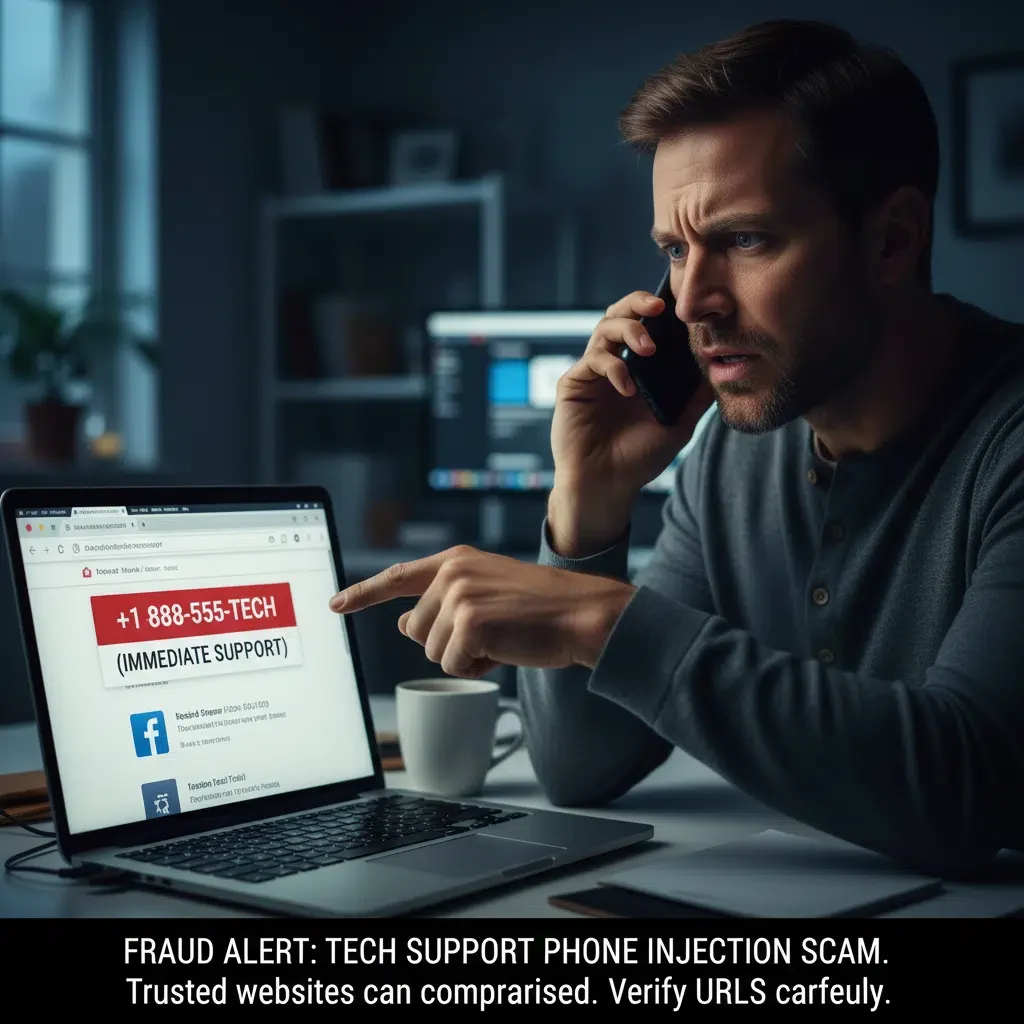
Cybersecurity experts are warning users about a growing scam in which fraudsters inject fake tech support phone numbers directly into real company websites, making the threat far harder to detect.
Fake tech support scams are evolving, with attackers now exploiting legitimate websites to display their own malicious phone numbers. Security researchers say this new approach allows scammers to bypass traditional warning signs that cautious users usually rely on.
Unlike classic phishing attempts that rely on fake domains, this technique abuses genuine websites belonging to well-known brands. As a result, users see a correct web address in their browser, giving the page an appearance of legitimacy.
How the Scam Is Being Carried Out
According to researchers, attackers are using a method known as search parameter injection, also referred to as a reflected input vulnerability. This allows scammers to manipulate how content appears on a webpage by adding malicious parameters to a legitimate URL.
In many cases, scammers purchase online advertisements that impersonate major brands. Clicking on these ads may lead users to the official website, but with altered URL parameters that inject fake tech support numbers into support or help sections.
• Scammer creates a malicious URL using search parameters
• The URL points to a real, trusted website
• Injected parameters modify page content
• Fake support phone number is displayed
• User calls the number believing it is legitimate
What Happens When the Number Is Called
Once a victim calls the fake support number, the scammer poses as a representative of the brand. Their goal is to convince the caller to share personal information, payment card details, or even grant remote access to their device.
In more advanced cases, victims may be guided into installing remote access software, allowing attackers to fully control their system and extract sensitive data.
Legitimate tech support teams do not ask for remote access, passwords, or payment details during unsolicited calls.
Major Brands Affected
Researchers report that this attack technique has been observed affecting a wide range of high-profile organizations, including technology companies, financial institutions, and online services.
Brands reportedly impacted include Apple, PayPal, Netflix, Microsoft, HP, Facebook, and major banking institutions. The widespread nature of the campaign increases the risk for everyday users.
How Users Can Protect Themselves
Security experts recommend exercising caution when encountering tech support phone numbers through search results or advertisements. One key warning sign is when a phone number appears embedded within the URL itself.
• Avoid clicking sponsored ads for tech support
• Check URLs for unusual parameters or encoded characters
• Be cautious of phrases like 'Call Now' or 'Immediate Support'
• Navigate directly to the company’s homepage
• Locate support options manually from the official site
Major companies typically do not advertise tech support phone numbers through online ads.
Navigating directly to official websites and avoiding sponsored support links remains the most effective way to stay protected from these increasingly deceptive scams.
Related Articles
• Why Protecting Your Email Helps Protect Your Money, Identity, and Online Accounts
• Crypto Scams Are Getting Smarter. Here’s How to Stay Protected
• Why Antivirus Alone Is No Longer Enough to Protect Your Digital Life
Saffron Guru LLC · IT support and online protection since 2016 · Call +1 844-313-4987 · Contact us